The first thing to know about the 2027 Chevrolet Bolt is that it won’t be around for very long. Chevy resurrected the Bolt in response to the dearth of affordable EVs, but then the political winds changed. Before the new Bolt even went on sale, General Motors announced it would be killed after one model year, freeing up its Kansas City plant to repatriate assembly of the Chevrolet Equinox from Mexico and the Buick Envision (or its successor) from China.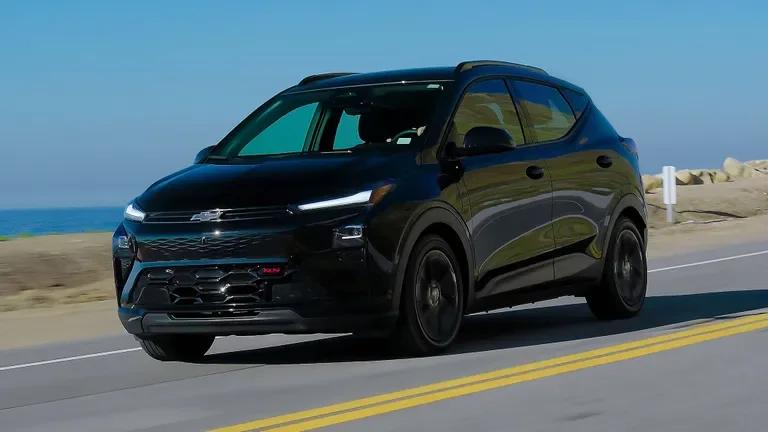
 On the day we got our first turn at the wheel, stocks plummeted, and oil prices spiked in response to the latest war in the Middle East. While we applaud GM for bringing more of its production stateside—really, we do—it sure would be handy to have an affordable, cheap-to-run EV like the Bolt in its lineup should a bad economy and high oil prices decide to hang around for a while.
Let’s pretend, at least for the next few minutes, that the world isn’t falling down around our ears and evaluate the new Bolt as if in a vacuum. Is this inexpensive electric car any good, or is GM doing it a favor by killing it in its infancy?
EUV’ve Seen This Before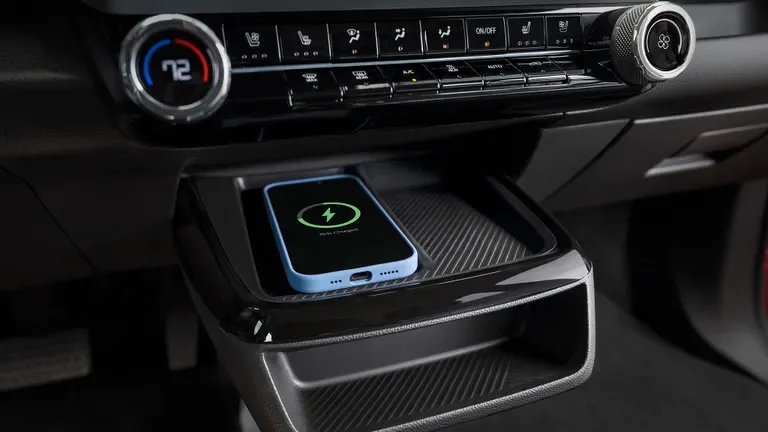
The 2027 Chevrolet Bolt is really an extensive update of the Bolt EUV, the larger of the two Bolt models Chevrolet used to sell (briefly—the Bolt EUV’s run was only two model years, so maybe there’s a pattern here). While the new Bolt looks a lot like the 2022-’23 Bolt EUV, the innards differ largely. The new Bolt gets a new 65-kWh lithium–iron phosphate (LFP) battery, which is less energy dense but more robust (and less fire prone) than the lithium-ion design generally found in pricier cars. A more efficient motor delivers 210 hp and 169 lb-ft to the front wheels.
The EPA-rated range is 262 miles, very useful for a commuter car, and the new Bolt, which uses the Tesla-style NACS port, can be charged at speeds of up to 150 kW. That may not seem like a stellar number—other EVs charge at rates approaching 350 kW—but this is not a huge battery, and Chevrolet says the Bolt can juice up from 10 to 80 percent in 25 minutes. However, LFP batteries are known to be poorer performers in the cold, losing range, power output, and charging speed. Preconditioning helps, and the Bolt’s Google-powered navigation system will initiate this process when you navigate to a charger.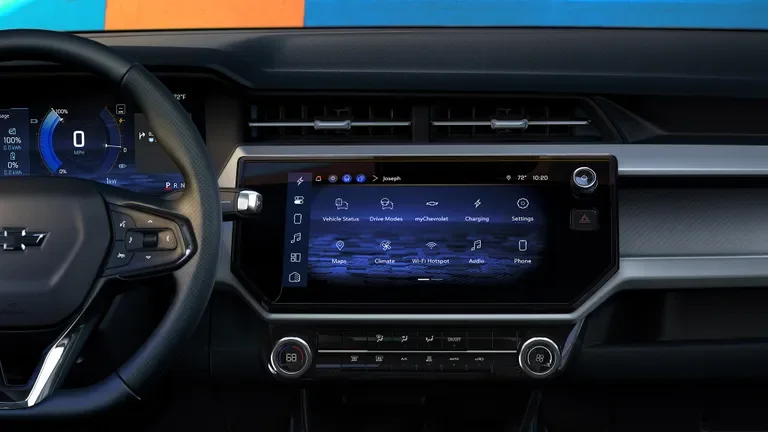
Base price for the Bolt LT is $28,995, and that includes a host of safety features usually optional on low-cost cars. That makes the ’27 Bolt, for now, the least expensive EV on sale in the U.S. market, undercutting the base-model ’26 Nissan Leaf by $2,540 and the ’26 Fiat 500e by $3,500. Pile on all the options to the sportier-looking Bolt RS model (mechanically identical to the LT), including Super Cruise, GM’s most awesomest hands-off driving system, and it tops out at $38,215. You can spend more than that on a Mazda CX-30, which doesn’t have anything like Super Cruise. (Oh, if only the $7,500 Federal incentive hadn’t gone away …)
Bolt Interior: Great for Your Stuff, Not So Good for You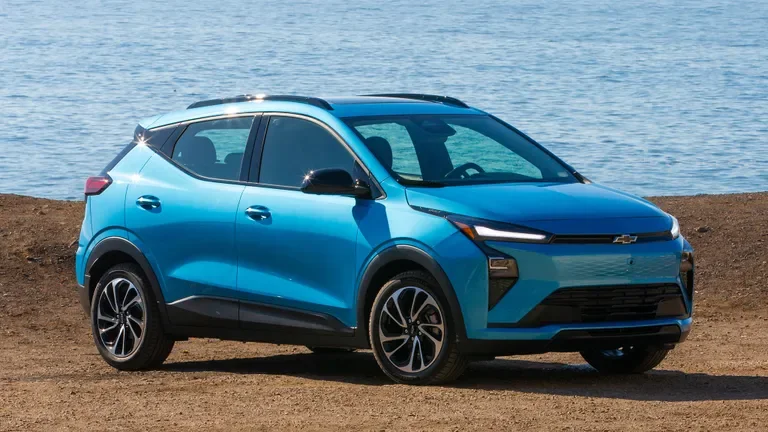
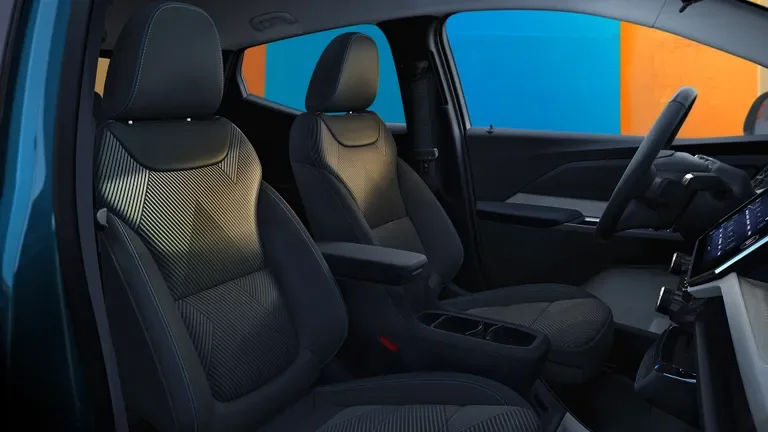
One of our biggest complaints about the old Bolt EUV was the interior, and here Chevy has made some meaningful improvements. The reshaped dash and center console feature several storage bays and bins, though most are open; only the glove box and the narrow center console let you hide valuables away. The dashboard’s white center panel brightens up the cabin and is a nice shout-out to the original 2017 Bolt EV. Climate controls are straightforward, but as with other GM models, there’s a learning curve to the Google-based infotainment system. Remember, too, that GM vehicles equipped with the automaker’s new setup don’t do phone mirroring; instead, you download apps to the car. The apps, including navigation, require an OnStar subscription, but all Bolts come with eight years of OnStar Basics.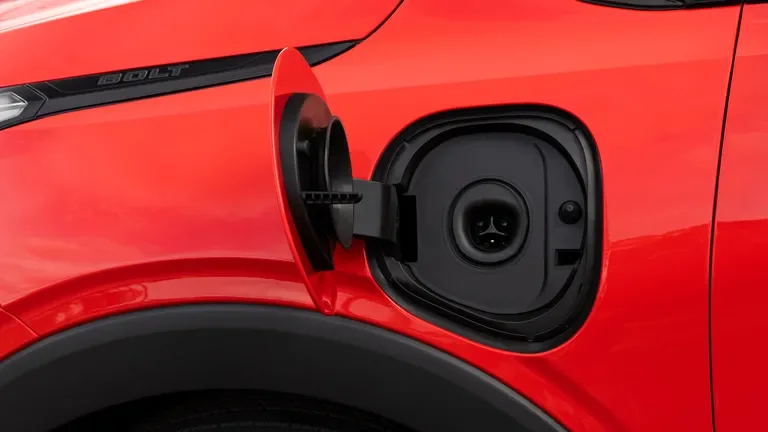
 Getting comfortable in this attractive interior is another matter. The driving position is fine, and there’s plenty of leg- and headroom up front, but the front seats seem to have been built to 7/8 scale. They’re undersized, stiffly cushioned, and don’t provide much thigh support, even for shorter drivers. It’s the same deal with the back seat, where the bottom cushion is too short, the floor is too high, and there’s no room to get your toes under the front seats. Back-seaters get USB ports but no cooling vents (so bring those USB-powered portable fans). It feels like the Bolt’s interior was built for a species that never grows taller than 5 feet.
At least the trunk is decent, with a sizeable well of underfloor storage. They used to call cars like these “grocery getters,” and the Bolt fits the bill nicely—at least for food shoppers who aren’t very tall.
Bolt EUV-Like Performance, for Better and for Worse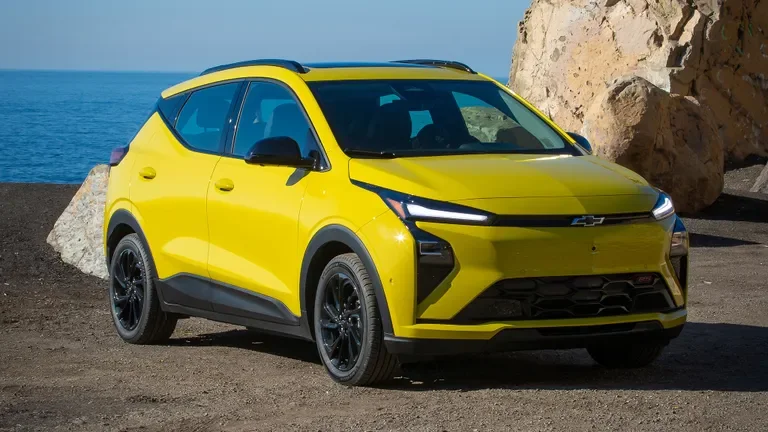
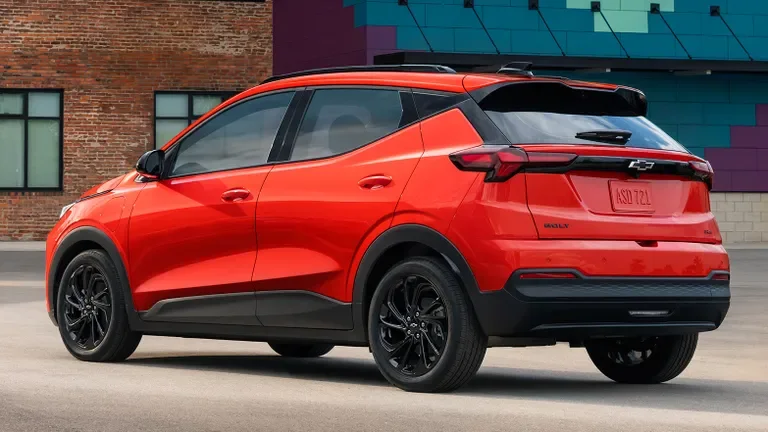 Acceleration is snappy for a single-motor EV and will feel downright quick to those used to economy cars with internal combustion engines. Regenerative braking works well, too, with two selectable one-pedal-drive levels. We complained about the old Bolt EUV’s brake pedal feel, and here Chevy has made significant improvement. Previously, both the EUV and the Bolt automatically mixed regenerative and friction braking, so drivers who weren’t comfortable with one-pedal driving could still recover as much energy as possible. The new braking setup has a more natural, linear feel to it than that of the old EUV, biting promptly (and almost aggressively) at the top of the pedal travel.
Another complaint we had about the Bolt EUV was its ride quality, and unfortunately, that remains a major issue for the 2027 Bolt. It feels as if the dampers can’t control the body’s up-and-down motions. Chevy sent us on a curated route through the back roads of Malibu, California, including The Snake, a recently reopened section of Mulholland Drive that’s one of the area’s best driving roads. The Bolt attacked it like a champ, accelerating aggressively, turning in sharply, clinging to the curves with sports-car tenacity, and no doubt raising a few eyebrows among the Miata-and-S2000 set. But when we detoured off the planned route to roads that weren’t freshly paved, and where the tarmac was wavier than usual due to damage from last year’s fires, the way the Bolt bounced and floated on its springs made us wonder if we were driving an EV or a waterbed. Hitting a midcorner bump sent the chassis into hysterics.
This wasn’t just a problem on curvy roads that few drivers will traverse. For all its bouncy-bounce and floaty-float, the Bolt hit pavement imperfections with a resounding crash, and even speed bumps taken at walking speed felt catastrophic. We were driving on roads we know very well, and the Bolt made every road feel rougher than it was. That’s an acceptable trait in a Porsche 911 GT3, but in a Bolt? Not so much. (How did this even happen to a car developed in Michigan, which isn’t exactly a bastion of glass-smooth pavement?)
High-End ADAS In a Low-End EV
We must mention the Bolt’s killer app, which is Super Cruise, the GM driver assistance system that lets you take your hands off the wheel on mapped roads. We’ve been singing the praises of this system for many years. The Bolt doesn’t get a watered-down version, either; this is all-singing, all-dancing Super Cruise, complete with automated lane changes and freeway-to-freeway navigation when you program a destination into the navigation system.
Super Cruise is, as you would expect, an option, and not a cheap one; it comes bundled with other options, and the cheapest you can get a Bolt with Super Cruise is $35,665. Still, that’s a (relative) bargain among hands-free driving systems, and it can really reduce fatigue on long trips or traffic-clogged, highway-centric commutes.
Should You Buy This Soon-to-Expire EV?
As a vehicle, the new Bolt is a mixed bag. We like the size, the interior decor, and the features set. If we didn’t know the price ahead of time, it’s doubtful we’d ever guess we were driving America’s least expensive electric car. Power, range, and charge times are all competitive with EVs costing a lot more, though we’d have to wait for the next cold snap to see what effect Old Man Winter would have on the Bolt’s LFP batteries.
Still, the Bolt’s annoyances are big ones. Front-seat comfort (or lack thereof) is one thing that can really irk long term, and the back-seat arrangement makes the Bolt better suited to groceries than families. And if you live in a place where frost wreaks havoc with pavement, that bouncy, crashy ride will get very old very quickly.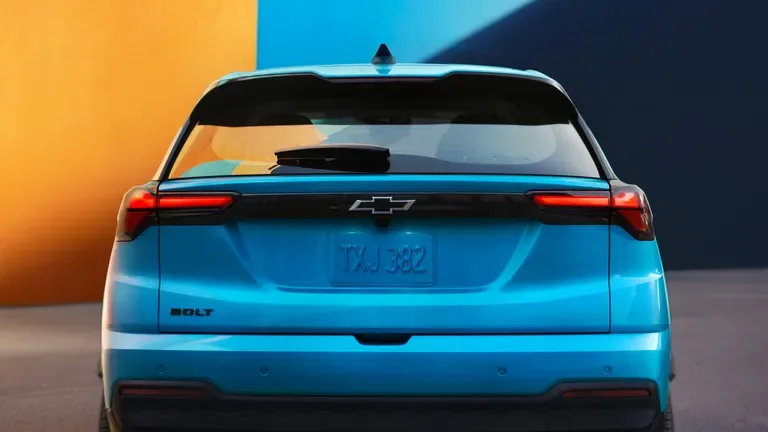
While we hesitate to dip our toes into politics (and you, dear readers, have made it clear you prefer we don’t), we must consider that the Bolt’s short life will likely encompass some troubled times. Energy prices are likely to spike, and an electricity price increase is likely to have a less deleterious effect on your transportation budget than a gasoline price increase. (If your house has solar, you’ll be basking in the sunlight.) The Bolt may bill itself merely as America’s least expensive EV, but purchase price is only part of the story; not only will it be cheap to power (especially with home charging), but with no engine, maintenance costs will be minimal. That makes the Bolt a bargain well beyond its (relatively) low price.
Still, we think any car should be a good long-term buy, and with only a single model year of production, parts availability could be an issue down the road. Buyers looking for the ultimate in cheap transportation might be better off with a Nissan Leaf. It’s not as good a value as the Bolt, but at least it’ll be around for a while longer.